Sound familiar?Steeles Corners
- The call
- The till drawer has been holding two days of cash because the new shop never got a proper safe, and a locked drawer under the counter is the only thing standing between that cash and anyone who works late.
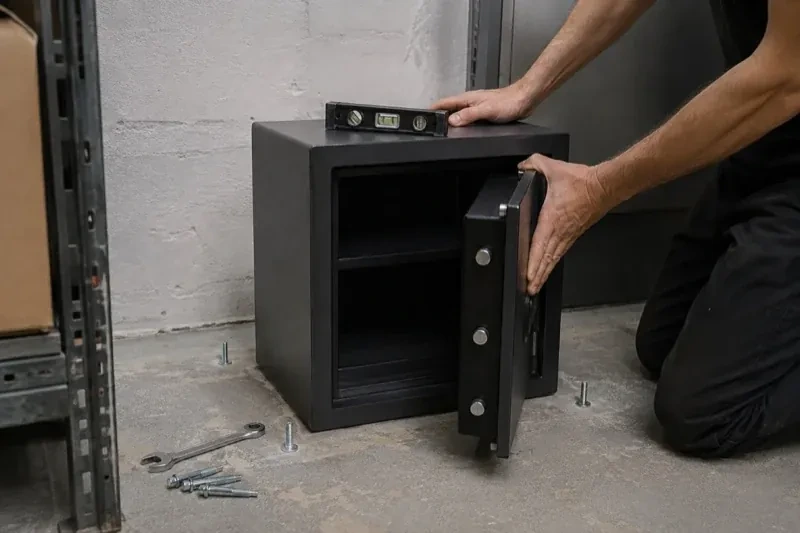
The office is moving three blocks over, and the old commercial safe that has sat bolted to the concrete for fifteen years now needs to come out, travel across town, and go back down just as solidly.
Relocating an existing safe is closer to a small structural project than a simple carry. The unit is unbolted, moved on proper equipment rather than dragged, and protected through doorways and stairwells that were never designed with several hundred pounds of steel in mind. At the new address the floor or wall construction is checked again from scratch, because a slab that held the safe at the old office may be entirely different from the one at the new address, and anchoring hardware is chosen to match rather than reused automatically.
Sound familiar?Steeles Corners
Safe Installation & Servicing · Steeles Corners
Scene 1
The surface behind the safe decides how it gets anchored, so it is checked before anything is ordered. Solid concrete accepts one style of anchor bolt; a wood subfloor over joists needs a different fastener reaching into structural framing rather than just the surface layer; a tiled floor cannot take a bolt at all without risking a crack around it. The locksmith also looks for slope, dampness, or a cold exterior wall that could sweat in humid weather, since all three affect where the safe should actually stand, not just how it gets bolted down.
Scene 2
A wood subfloor calls for a different approach, since a bolt into surface plywood alone pulls out under real weight. The locksmith locates the floor joists beneath the finished surface, drills pilot holes through the subfloor into solid framing, and drives long lag bolts or structural screws with washers that spread the load across the wood. Carpet, vinyl, or laminate over the subfloor is worked around rather than through wherever possible, so the finished floor is left as close to undisturbed as the anchoring allows.
Scene 3
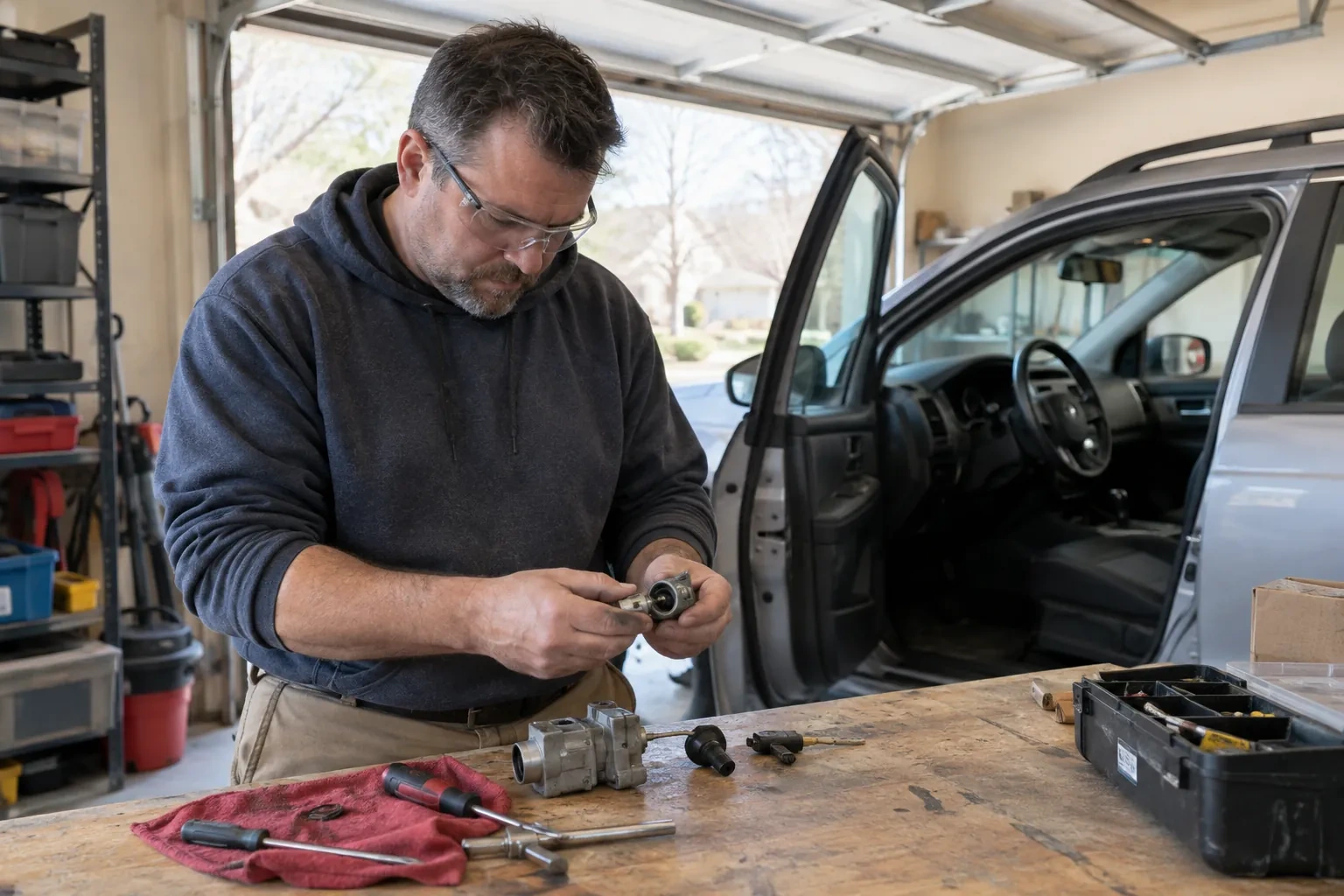
An electronic lock gives some warning before it dies, usually a beep or a flashing light during normal use, and treating that warning as a job to do that same week rather than eventually is what keeps a dead battery from turning into a locked-out morning. Keeping a spare battery of the correct type near the safe, rather than searching for one after the warning starts, closes the loop. The mechanical override key behind the keypad is worth keeping somewhere separate from the safe itself, not taped underneath it.
What shapes the quoteSteeles Corners Locksmith Services
FeesSame any hour
Yes, servicing does not depend on who did the original installation. The locksmith opens the bolt-work, tests the lock through a full cycle, checks the anchoring underneath, and replaces batteries in an electronic lock as needed, regardless of the brand or who fitted it originally. Not knowing the history of the unit just means a slightly more thorough first look before any work begins.
A fire-rated interior works by sealing tightly, and that same seal traps ordinary household humidity over time with nowhere to go. Opening the door for a few hours every few weeks lets trapped air exchange with the room, and a desiccant packet inside absorbs moisture between those openings if it is refreshed on schedule. A musty smell or a soft-feeling document is the interior telling you it needs airing out.
Yes, though it is worth knowing the interior conditions suited to each are slightly different. Paper gains real heat protection from a fire-rated lining, but that same sealed lining traps humidity, so paper stored inside needs the same periodic airing and a desiccant packet as any fire-rated interior. Cash and other valuables mainly need the tool resistance of the body and door and tolerate the sealed environment more easily. A single well-chosen unit can hold both together without conflict, particularly with paper kept in a sealed folder or bag inside.
YorkOntario
Every square is one home in a hundred.
On-site assessment
The office is moving three blocks over, and the old commercial safe that has sat bolted to the concrete for fifteen years now needs to come out, travel across town, and go back down just as solidly.
(289) 216-9485, open 24/7.
On-site assessment preferred · (289) 216-9485, open 24/7